

Roof Leaks in Los Angeles: Chasing "Ghost Water" Without Replacing the Whole Roof
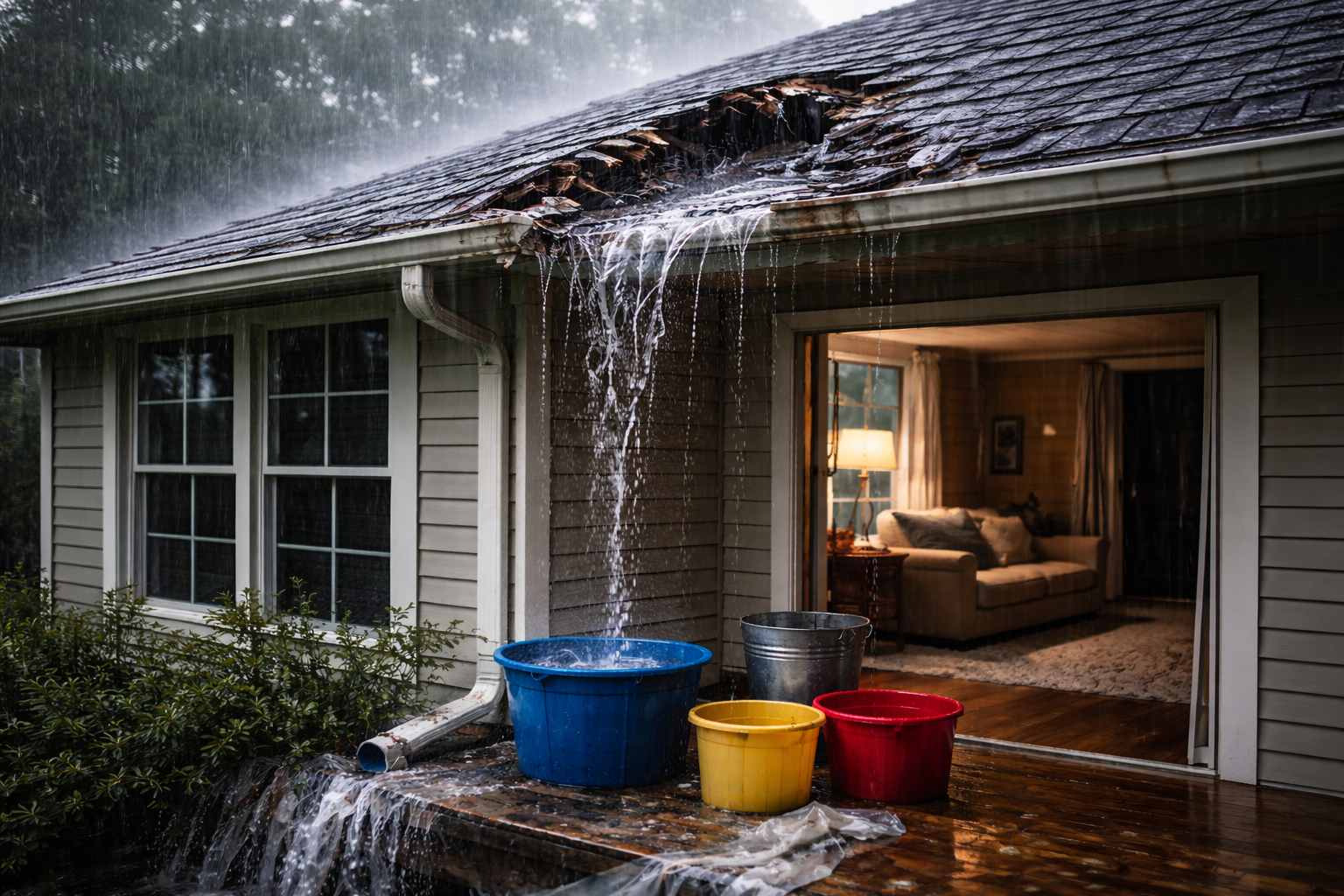
You've got a water stain on your ceiling.
You go up on the roof, look directly above it, and... nothing. The roof looks fine. No obvious holes, no missing tiles, no problem.
But the stain keeps getting bigger.
Welcome to the world of ghost water: one of the most frustrating problems homeowners in Glendale, Burbank, Pasadena, and across the San Fernando Valley deal with. Because water doesn't play fair. It sneaks, it travels, and it shows up in places that make zero sense.
The good news? You usually don't need to replace your entire roof. You just need to think like a detective.
Why water behaves like a ghost
Water is sneaky.
When it gets through a tiny crack or gap in your roof, it doesn't just drip straight down. It follows the path of least resistance: along rafters, under flashing, across beams, and sometimes several feet away from where it actually entered.
By the time you see a stain on your bedroom ceiling, the water could've traveled 10 feet from the actual leak point.
That's why pointing at a ceiling stain and saying "the leak must be right there" usually leads to wild goose chases and wasted money.
Small image suggestion (1/3 width): water stain on ceiling (place here, aligned left or right)
Common places "ghost water" hides in LA homes
Los Angeles homes: especially older ones in Burbank, Glendale, and Pasadena: tend to have a few usual suspects when it comes to sneaky leaks.
1) Roof valleys
Where two roof planes meet, water runs fast and heavy. If the flashing isn't sealed right, water gets in and travels underneath.
2) Around chimneys
Flashing around chimneys takes a beating from LA's temperature swings. Small gaps let water in, and it runs down the framing before showing up inside.
3) Skylight edges
Skylights are awesome: until the seals start failing. Water sneaks in at the edges and follows the framing.
4) Tile edges and gaps
Clay or concrete tile roofs (super common in the Valley and Pasadena) can shift or crack. Water gets under a single tile and wanders around before finding a way in.
5) Vent pipe boots
Those rubber seals around vent pipes? They crack in the sun. Water slips in and follows the pipe down into walls or ceilings.
How to start tracking down your ghost leak
If you're dealing with mystery water, here's how to start narrowing it down: without tearing your roof apart.
Step 1: Map the stain and work backward
Look at where the water shows up inside. Then think about what's uphill from that spot on the roof.
Water flows downward and along horizontal surfaces. Trace that path back.
Step 2: Check the attic (if you have access)
Go up there with a flashlight after a rain. Look for:
- wet insulation
- water trails on rafters
- discoloration on wood
- mold or mildew smells
Follow any wetness back toward the roof deck. That'll get you closer to the entry point.
Small image suggestion (1/3 width): flashlight inspecting attic rafter (place here)
Step 3: Inspect flashing and seals first
Most leaks in LA aren't from missing shingles or tiles. They're from failed flashing, cracked caulk, or worn seals.
Check around:
- chimneys
- skylights
- vent pipes
- roof valleys
- any place two materials meet
If you see gaps, cracks, or rust: you're getting warmer.
Step 4: Do a water test (carefully)
If you think you've found the spot, grab a hose and run water over that area for 5–10 minutes. Have someone inside watching the stain.
If it gets wet, you found it. If not, keep searching.
(Don't flood your whole roof: just test small sections at a time.)
When to call a pro (and when you can DIY)
Some leaks you can handle. Some you really can't.
You can probably DIY if:
- It's a small crack in caulk or sealant
- A vent pipe boot needs replacing (they're like $15 at the hardware store)
- A single tile shifted and needs to be reset
- Flashing just needs fresh sealant
Call a pro if:
- You can't find the leak after multiple inspections
- The leak is near a chimney or skylight (tricky flashing work)
- You're seeing multiple stains in different rooms
- There's rot or structural damage in the attic
- You're not comfortable on a roof (no shame: it's safer)
In Glendale, Burbank, and Pasadena especially, a lot of homes have tile or older composition roofs that require specific repair techniques. A good roofer can often fix the problem in an hour or two without touching the rest of the roof.
What a "ghost leak" repair actually costs (and what it doesn't)
Here's the thing: most homeowners panic and think "roof leak = new roof."
Not true.
A targeted repair usually runs somewhere between $200–$800 depending on:
- how hard the leak is to find
- what materials are involved
- how much flashing or sealant needs replacing
Compare that to a full roof replacement, which in the Greater LA area can run $8,000–$25,000+ depending on size and material.
Big difference.
If a roofer tells you that you need a whole new roof because of one stain, get a second opinion. Sometimes that's true: but often it's not.
Tools pros use to find ghost leaks (that you probably don't have)
If you've tried everything and still can't find it, this is where professionals earn their money.
Infrared cameras
These detect temperature differences that show where moisture is hiding: even behind walls or under roofing material.
Moisture meters
They measure water content in wood and drywall to trace the path back to the source.
Electric field vector mapping
Sounds fancy, but it's basically a way to send a small charge through the roof and detect where water is creating a conductive path. Super accurate.
Smoke tests
Literally blowing theatrical smoke under the roof to see where it escapes. Low-tech but surprisingly effective.
These tools can pinpoint a leak in minutes that might take you days to find on your own.
Small image suggestion (1/3 width): thermal camera scanning roof (place here)
Preventing future ghost leaks
Once you've tracked down and fixed your ghost, here's how to keep it from coming back:
- Inspect flashing annually – especially around chimneys, skylights, and valleys
- Replace vent pipe boots every 5–7 years – they crack in the LA sun
- Reseal roof penetrations – caulk doesn't last forever
- Keep gutters clean – clogged gutters cause water to back up under roof edges
- Check your attic after heavy rain – catch problems early before they become expensive
In Southern California, we don't get heavy rain often: but when we do, it's usually intense. That's when weak spots show up.
Final thoughts: don't let ghost water haunt you
Roof leaks are frustrating, but they're rarely as bad as they seem.
Most of the time, you're dealing with a small entry point that's letting water wander around before it shows up inside. With some patience, a flashlight, and a little detective work, you can usually track it down without replacing your whole roof.
And if you can't? Call someone who deals with this stuff every day. A good roofer in the Valley, Pasadena, Glendale, or Burbank has seen it all and can usually solve the mystery in one visit.
Water might act like a ghost: but ghosts can be caught.
Need help figuring out what your home is worth (leaky roof and all)? Check out the Free Home Valuation tool at www.ezlamove.com to see where you stand in today's market.
Categories
Recent Posts